
ALL YOU NEED TO KNOW ABOUT FIRST-AID
Clear instructions & Thorough information


At any second, a person around you could get infected by a virus and become ill or seriously injure himself. In cases like this it would be very helpful for someone to have the knowledge of applying first aids to help enlighten the current situation and prevent it from becoming worse. When it comes to a severe medical emergency you could end up even saving a life.
Nowadays, many individuals fall short of the knowledge and confidence to apply first aid when it is required.
In accordance with the Red Cross UK, 70% of people feel helpless during a medical emergency because they haven’t learned about first aids. The above statistic stresses how vital it is for all, to acquire basic first-aid knowledge so they are properly prepared if they find themselves or any another person in an emergency.
The implementation of First-aid contribute in reducing pain, minimize injuries, and can save an individual from permanent damage. First-aid portrays how basic medical knowledge can go a long way and help out people in accidents and medical emergencies.
THE 1O BASIC FIRST AID SKILLS
Here’s Each Separately
To evaluate any emergency, you should have in mind the START Triage which evaluates the victim's status and assigns them to specific categories, while at the same time determines priorities. If the person is walking, then he is considered as a MINOR (green) case. If he isn't walking but is breathing, has a radial pulse and follows commands, then he is thought to be DELAYED (yellow). If he isn't walking, doesn't have a radial pulse and doesn't follow commands but does have an open airway, then he placed in the IMMEDIATE (red) category. Lastly if he isnt characterized by any of the above he is classified as DECEASED (black).
1. APPLYING CPR
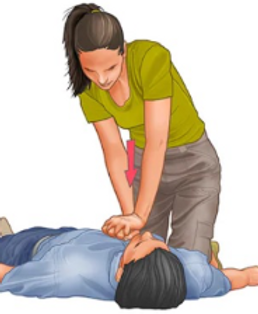
The correct application of CPR consists of specific steps. Firstly, you should call 911. Then check the person’s breathing and pulse and clear his airways. If you don’t detect the individual’s breathing, proceed with chest compressions, on the sternum (in between the nipples) by pushing down on the patient’s chest, performing 100-120 compressions per minute. Don’t stop chest compressions unless the person starts to breath or emergency medical help arrives. When the individual is breathing, observe their breathing and pulse until medical help reaches the specific site.
2. STOPPING A SEIZURE
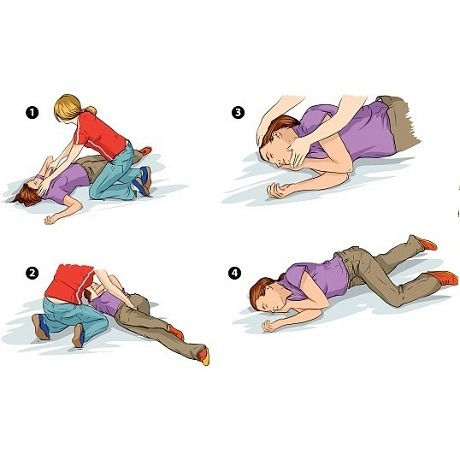
In case someone has a seizure, you should not attempt to keep them still, because that could lead to serious injuries. On the contrary, you should place something soft underneath their head, then ensure that there aren’t any harmful objects surrounding the sufferers and help them breath, which can be done by putting them in the recovery position, once they stop convulsively shaking. It is very important to time the seizure. Don’t move them, neither give them food or water.
3. TREATING BURNS AND SCALDS
As a matter of fact, there are three different degrees of burns. First and second-degree burns are less severe than third-degree burns.
In general, to treat a burn:
-
Instantly get the person away from the source of the heat in order to stop the burning.
-
Then, provide lukewarm running water for 20 minutes, to cool the burn – it isn’t suggested to use ice, iced water, creams, or oily substances such as butter.
-
Make sure to clear the area of clothing or jewellery that's close to the burnt part of skin – howeverdon’t try to move anything that's stuck to the skin.
-
Ensure that the person remains warm – preferably by uutilizing a blanket, it is important for the cloth not to be rubbed against the burnt area.
-
After, leave a sheet of cling film on top of the burn, for it to be covered – a clean plastic bag could also be of great use for such purpose.
-
Access painkillers like ibuprofen or paracetamol to enlighten the pain.
-
If there are burns on the face or eyes, make the patient sit up, to minimise the swelling.

4. DEALING WITH SPRAINS
It is known that sprains is a frequent form of injury. When it comes to a sprain, the afflicted joint should be wrapped with a bandage and then, it should be elevated up until medical help arrives. Most of the times the use of ‘RICE’ structure is employed, which stands for: ‘’rest, ice, compression, elevation’’).

5. DOING STITCHES
It is possible that you find yourself in a situation, where you are required to stitch a wound before medical professionals can take matters into their own hands. So, to stich a wound safely and correctly, you must:
Evaluate the current situation. Try stitching only if there is no access to any proper medical help and no other options.
Proceed with cleaning the wound. Specifically, gently let a small amount of boiled water insert the wound-you could utilize a plastic bag with a hole and continue by rubbing the wound with soap.
Then sanitize all the materials that you are about to use.
Stitch the wound.
Then tie the stitches with a knot.
Cover the wound.

6. HANDLING CONCUSSIONS AND HEAD TRAUMA
Symptoms that indicate that someone has a concussion include:
-
observed memory loss.
-
absence of consciousness following head injury.
-
disorderly vision-for example ‘’seeing stars’’ or having blurry vision.
-
blank expression, delay in responding to simple questions right after head injury.
If you realize that someone has a concussion:
-
Immediately call 911.
-
Cease to participate in any form of activity.
-
Use cold compression on the injury to prevent swelling-in cases of emergency that could be a sack of frozen vegetables enclosed by cloth.
-
The ice should be applied to the injured area every 2 to 4 hours and should remain for 20 to 30 minutes.
-
The patient should take paracetamol, but not non-steroidal anti-inflammatory drug painkillers like ibuprofen and aspirin.

7. MANAGING FRACTURES
Again, there are particular steps that should be taken in mind.
To begin with, you should attempt to stop the bleeding. This will happen by applying pressure using bandage or a clean cloth.
Make sure that the injured area remains still/ is immobilized. Don’t try to push a bone to put it back to its place. You should attempt to apply a padding splint to reduce the pain.
Use ice packs wrapped with cloth to minimize swelling and pain.
It is common for a broken bone to have caused severe shock which should be treated by laying the person down with the trunk slightly higher than the head and elevate the legs.
What also could be done is to use a splint which should be set properly and stabilize the bone until an expert arrives. Splinting can be taught through a basic first aid course.

8. COPING WITH A STROKE
To identify a stroke, one could use the FAST method. FAST is an acronym, in which F stands for FACE, implying that you should act the patient to smile looking to see if either side of the face is drooping. Then, A represents ARM, and you should tell them to lift both arms upwards to see if one of them drifts downward. To be continued, S answers for SPEECH, where the sufferer should be requested to say something. In the case of a seizure the answer would sound particularly strange as you would detect slurred speech and the patient having a hard time with talking. Lastly, there is T for time. It is of great importance that if symptoms are observed 911 should be called immediately.
Things to avoid:
The patient shouldn’t be let to sleep or persuade you that medical help isn’t required.
Don’t provide them with food, drinks or any kind of medication.
Don’t attempt to drive another patient or even yourself to the hospital alone. Let an ambulance do the job.

9. FIRST AID FOR CHOKING
To safely deal with choking:
If you spot someone choking, you should make him cough to get rid of whatever is blocking their airways.
If the blockage is of great severity, the individual won’t have the ability to speak, cough or breath. In that case, help them bend slight forwards and tap firmly their back, in between the shoulders 5 times to try and open the airways/stop the blockage.
If they remain choking, provide 5 abdominal thrusts. To do this correctly, you should place your hands around the patient’s waist and pull inwards and then upwards, right above the belly button.
If nothing works, call 911 right away.

10. REDUCING EXCESSIVE BLEEDING
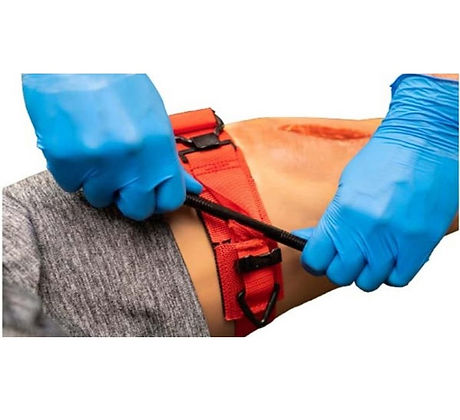
Firstly, you should call 911 depending on the severity of the wound. After, sanitize the wound by removing any visible piece of dirt or debris. Then, apply pressure to the wound with anything within reachable range, preferably with a clean cloth or tissue to block the blood/stop it from escaping (blood loss should be avoided).

Answering Common Questions
Interview by Dr. Babatunde Omonojo, GP at Basingstoke and North Hampshire Hospital

1. What are the most common situations that require first aid?
Some of the most common injuries requiring first aid include cuts/scrapes, sprain/strains, burns, and insect bites. However, some less common things are important to keep in mind due to their severity. These include anaphylaxis, drowning, choking, bleeding, and collapse.
2. Where should there be first aid kits?
In an ideal world, there should be a first aid kit in every building and public space.
3. What is the first thing to do when you see someone who has collapsed?
The first and most important thing to do before approaching an individual that collapsed is to be conscious of your safety. You must ask yourself; is it safe to approach? Check for naked wires, oncoming traffic, and toxic fumes/chemicals. Once you have established that it is safe to approach, you should try to rouse the person by shouting and shaking them. If that doesn’t work, check for signs of life by checking for a pulse and listening/feeling for breath sounds. If they have a pulse and are breathing, you should put them in the recovery position. If there is no sign of life, shout for help, call the emergency number, and start CPR.
4. What if I do not have a first aid kit at the accident scene?
Not all first aid requires a kit. For example, CPR can be started without any specialist kit whilst waiting for emergency services. In a situation where you do not have a first aid kit, you should do what you can and call for help.
5. What are some emergency scenarios that do not require a first aid kit?
Choking is a very good example. If you see someone choking, the first thing you should do is slap their back very firmly to try to dislodge whatever they are choking on, if that doesn’t work, you can perform the Heimlich maneuver (abdominal thrust) which again doesn’t require any specialist kit.
6. What are the rules that should be followed when applying first aid?
The one cardinal rule is to only do things that you are competent in doing otherwise, you might make a bad situation worse.
7. What should public spaces and other settings be equipped with to help people in need of first aid?
Aside from the standard stuff in your typical first aid kit, I believe all public spaces should have artificial defibrillators, a small oxygen canister and mask, and an adrenaline pen for anaphylactic emergencies.
Availability for Further Questions
Mon - Fri: 9am - 6pm
Sat: 10am - 2pm
Sun: Closed


